
























Most crypto social media marketing doesn’t fail because of low effort, but because teams don’t know how to turn attention into actual users.
In crypto, social presence transcends visibility. It serves as a distribution channel, community hub, and usually the first point of contact with potential users and investors. Anything outside this is pure noise.
TL;DR: Crypto Social Media Marketing in 2026
- Visibility without audience alignment doesn’t convert.
- Social channels are your primary distribution layer in Web3.
- Engagement ≠ adoption.
- Measure conversion metrics, not vanity metrics.
- Long-term community infrastructure beats short-term hype.
The Crypto Social Media Marketing Problem
Most crypto teams approach social media as an attention engine. They focus on posting frequently, staying active, and keeping the timeline alive.
After TGE, the momentum collapses. There’s audience disengagement and what once looked like an actively growing community starts to feel like noise.
The deeper issue is that visibility without clarity does not build conviction. It generates attention, but attention alone is unstable. Users may engage with posts, react to announcements, or follow accounts, but if the audience does not align with the product’s use case, that attention rarely converts into adoption.
What Is Crypto Social Media Marketing?
Crypto social media marketing is the process of creating, distributing, and engaging on social media to build visibility, trust, and acquire users for crypto-related products.
Social media marketing in crypto goes beyond a simple marketing channel. It serves as your primary distribution layer, shapes your public reputation, and is often the first place users encounter your product.
Unlike traditional industries where users might find products through search engines or advertising, crypto participants live on platforms like X, Discord, and Telegram. This is where narratives form, communities gather, and projects prove their legitimacy.
Crypto social media marketing also provides direct feedback loops that do not exist in traditional markets. You can test messaging, gauge community sentiment, and identify emerging concerns in real time. This immediate feedback helps teams adapt quickly, whether adjusting tokenomics based on community input or clarifying technical features that users find confusing. Eventually, the projects that succeed treat social channels not as broadcast tools but as two-way communication systems.
Social Media Marketing Toolkit
The social media marketing toolkit is a marketing stack that separates successful DeFi and Web3 projects from those that struggle.
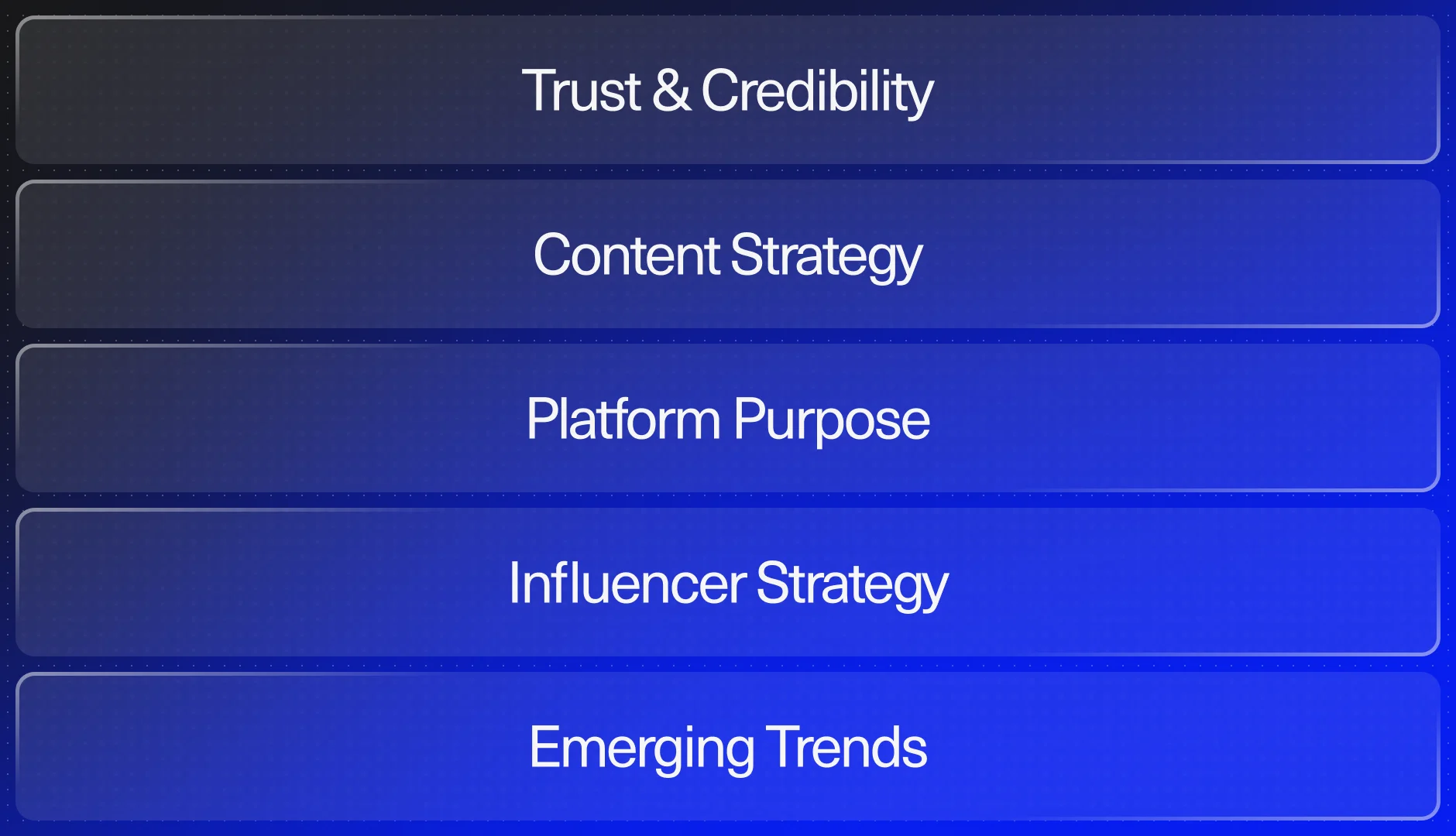
We’ve grouped them into five different layers:
Audience Alignment and Prioritization
Before any content goes out, the first priority is reaching the right audience. Social media is not a broadcast channel. It is a distribution system where relevance determines results. Alignment ensures your content shows up in front of the people who matter, at the moment they are most likely to engage.
Crypto projects have multiple stakeholders, including users, developers, liquidity providers, and investors, each with distinct motivations. Treating them as a single audience dilutes messaging and weakens positioning. Clear prioritization focuses efforts on the participants most likely to drive adoption, liquidity, and sustained growth at every stage.
Content Strategy
Content strategy begins with behavioral analysis to identify what messages resonate and when, then moves to segmentation analysis to tailor communications for each audience group.
In crypto, attention is driven by relevance. Early-stage participants are trying to resonate with your vision and direction, so they look for clear, educational content that explains what you are building and why it deserves attention.
As your project grows, expectations shift. Users want deeper insight through documentation, integration guides, and product updates that signal progress. Investors, on the other hand, are not looking for narratives alone. They want clarity on token design, traction, and long-term viability. When you treat all audiences the same, your message loses its edge and struggles to land.
Posting regularly may also create the illusion of activity, but repetitive or surface-level content leads to dilution. Strong content is what sharpens your project narrative, demonstrates expertise, and builds authority over time. Educational threads, insights, and community-driven highlights act as trust signals, giving your audience a reason to pay attention, engage, and return.
Platform Purpose
Identifying platform purpose ensures your content reaches the right audience. This requires knowing what type of content fits each channel and which audience naturally aligns with it.
Each platform has its own rhythm and role. On X, speed matters, and visibility favors accounts that participate in conversations rather than just broadcasts. Threads allow you to break down complex ideas into scannable insights, while Spaces enable real-time interaction with potential users.
Discord, on the other hand, acts as the community headquarters where users, developers, and token holders engage more deeply. Verification reduces bot activity, while clear rules maintain order and build trust. Well-structured channels, pinned announcements, and active moderation keep discussions focused and engaging.
Telegram, by contrast, serves niche audiences and thrives on fast, real-time conversations. Pinned messages highlight key updates, dedicated channels separate announcements from discussion, and bots automate routine tasks to keep the community responsive.
Together, these platforms attract different audiences and support distinct types of interaction. Understanding who inhabits each platform and what content they expect ensures social media becomes a precise tool for adoption rather than just visibility.
Influencer and KOL Strategy
Influencer partnerships amplify your message beyond your existing audience. In crypto, Key Opinion Leaders (KOLs) hold significant weight over project perception and investment decisions. However, influencer marketing in crypto requires careful execution. Audiences have become skeptical of paid promotions that lack substance or authenticity.
Emerging Trends in Crypto Social
The crypto social space changes as new platforms emerge and user behaviors shift. Short-form video has become a high-velocity channel, with projects on TikTok and YouTube Shorts reaching untapped audiences. These platforms turn complex concepts into visual stories, making DeFi and Web3 more approachable. With shrinking attention spans, content that communicates quickly and clearly becomes a conversion driver.
At the same time, decentralized social platforms like Farcaster and Lens Protocol signal a structural shift in how crypto communities organize. They provide censorship resistance and true user ownership. While their audiences are smaller than on established networks, early adoption marks them as hubs of innovation.
Alongside these shifts, AI tools are reshaping content creation and community management. They automate drafts, translations, and routine queries. Yet, AI alone cannot carry the weight of authentic engagement. Communities respond to human nuance, context, and empathy. Teams that integrate AI efficiency with genuine human touch are the ones positioned to succeed.
Common Social Media Marketing Mistakes
Most social media marketing strategies fail from neglecting five important factors:
- Vanity performance metrics: Tracking vanity metrics like follower count or impressions gives a false sense of success and obscures real growth.
- Wrong crypto community management effort: Failing to handle technical issues, market volatility, competitive attacks, or community conflicts properly, turning crises into reputation disasters.
- Wrong influencer marketing approach: Wasting resources on misaligned influencers and KOLs.
- Broken feedback loop: Not paying attention to community complaints and suggestions.
- Not building for the longterm: Zero or ineffective user retention strategy.
How to Fix Crypto Social Media Marketing Mistakes
Social media marketing mistakes cost projects time and resources by generating hype that fails to drive adoption. Projects without a structured Web3 crypto marketing strategy consistently struggle with post-TGE retention, regardless of their initial visibility. Yet, they can be fixed.

We’ve grouped the solutions into five layers:
Reinforce Content Strategy
In Web3 social media marketing, consistency matters more than volume. Posting ten times a day with low-quality content is worse than posting twice daily with valuable insights. Establish a sustainable rhythm your team can maintain long-term and support with content calendars aligned with key events, such as product launches, partnerships, or ecosystem milestones. When managed deliberately, your content becomes a strategic growth driver rather than an afterthought.
Measure Social Media Performance
What you measure determines what you optimize for. Vanity metrics like follower count or post impressions offer limited insight into real growth. Focus instead on metrics that reflect user behavior and project impact. Monitor engagement rates to see how well content resonates, and track referral traffic from social channels to your website or documentation.
At the same time, measurement isn’t one-size-fits-all. DeFi marketing on X is different from Discord marketing, or a crypto Telegram marketing strategy, and your metrics must reflect that.
On X, track reply quality and thread performance alongside basic engagement metrics. On Discord, monitor message frequency, new member retention, channel activity distribution, and support ticket volume. For Telegram, measure response times and community-initiated discussions. These platform-specific metrics reveal where your strategy succeeds and where it needs adjustment.
Implement Feedback Loop
Feedback loops turn social media from a broadcast tool into a responsive system. Crypto communities send real-time signals that reveal what resonates, what confuses, and what sparks community conversation. Ignoring these cues leaves your content flat and disconnected, while actively listening to feedback not only keeps your audience engaged but also compounds trust and amplifies the impact of every post.
Trust, Engagement, And Community Incentives.
Scale your community infrastructure before you need it. Projects that delay implementing proper community management until Discord reaches 10,000 members invite disorder. Set up organized channels, clear rules, and moderation tools early to keep the community healthy and engaged.
Consider introducing community roles that reward active participants and create pathways for members to contribute meaningfully to your project. Roles that reward contribution and open pathways for engagement turn members into stakeholders, making your community a self-sustaining growth engine.
Long-Term Resources
Long-Term Resources let your social presence work for you over time. When you invest in communities, educational content, and internal processes, you’re building a foundational pillar that grows with your project. Clear procedures, reusable templates, and evergreen educational threads strengthen your ecosystem as it scales. Thinking beyond the next post turns social media from a fleeting broadcast into a lasting engine for adoption, trust, and sustainable growth.
Strategic KOL Partnership
Successful influencer strategies prioritize alignment over reach. A KOL with 500,000 followers has little value if their audience isn’t relevant to your product. Work with influencers whose values reflect your project and whose followers match your target users. Partnerships grounded in authentic product use outperform transactional promotions every time.
When Crypto Social Media Marketing is Mandatory
If you’re preparing to launch your product or getting ready to go live on mainnet, you need social media marketing. In crypto, products do not speak for themselves at launch. Visibility, positioning, and CT narrative shape first impressions long before users interact with the product. Without a deliberate presence, even the most innovative DeFi products enter the market unnoticed.
If you’re trying to build a community, you need social media marketing. Community does not emerge from existence; it is built through consistent communication, shared understanding, and ongoing interaction. Social platforms are where early users move from awareness to participation.
If you’re approaching a TGE, you need social media marketing. A TGE attracts attention, but attention alone is unproductive. Without structured messaging and audience alignment, it draws token speculation instead of conviction, and short-term airdrop farming interest instead of real participation. A winning TGE marketing strategy lets you attract the right audience for your project.
If you have already launched your token, you need social media marketing. The post-TGE phase can be tricky, as attention often drifts to the next launch, latest alpha gem, or a fresh narrative. Your post-TGE marketing must provide a clear sense of direction and maintain engagement to keep the community aligned and prevent skepticism.
If you’re building in a competitive market, you need social media marketing. Most protocols, wallet tools, DEXs, dApps, and custody solutions are also competing for the same attention. Meanwhile, differentiation is not always technical. Clear communication, consistent messaging, and strong positioning determine which projects remain visible and which becomes another dead project.
If you’re looking to raise your ICO, or IDO, you need social media marketing. Investors do not solely rely on whitepaper and use cases; they observe traction, community strength, and narrative clarity. Strong social presence signals momentum, credibility, and market relevance.
If you’re struggling to convert visibility into actual adoption, you need social media marketing. Attention without direction leads to wrong audiences. Structured communication is what guides users from interest to understanding, and from understanding to action.
Why Crypto Marketing Agencies Reduce Risk
Crypto marketing agencies reduce social media marketing risk due to their years of audience familiarity, proven content system, creators vetting, and fluent crypto-native communication styles.
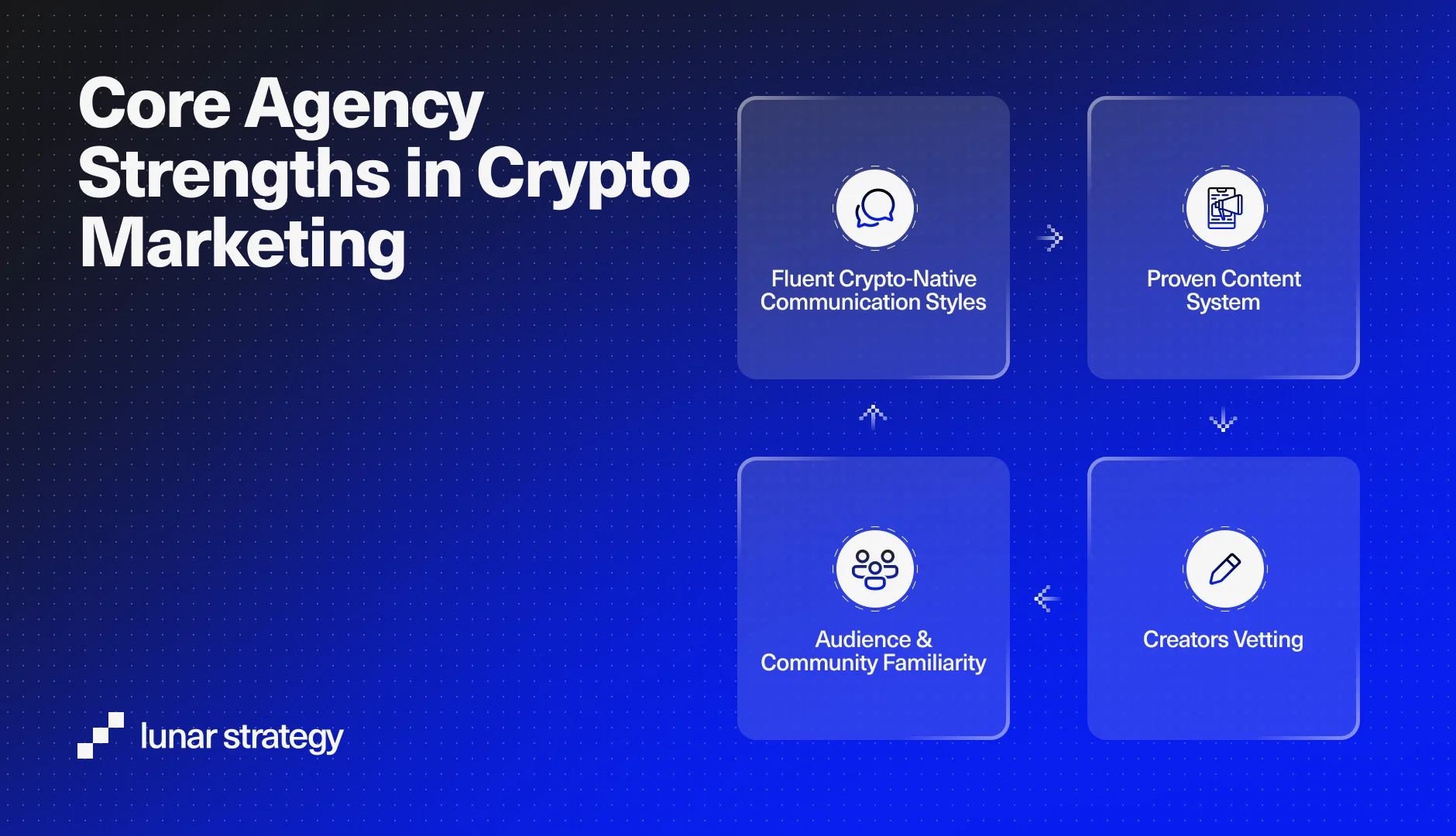
Agencies don’t just post content; they understand the algorithms that generate momentum. They are fluent in the language of users, token holders, and developers, and know how to capture leads, nurture them, and boost retention.
Beyond execution, agencies bring deep expertise in crypto storytelling and conversion, whether through posts, threads, visual storytelling, or multimedia production, all while grounding content in real user behavior and engagement signals.
With long-term industry experience, agencies can identify KOLs who genuinely align with your project. Instead of overspending on influencers who constantly shill or have a history of rug pulls, they target reputable figures whose audiences resonate with your product.
While your team stays heads-down building the product, agencies keep the social engine running. For projects in growth mode, this often separates noise from momentum and outperforms trying to cobble results together with people who haven’t lived and breathed crypto marketing.
How Lunar Strategy Approaches Social Media Marketing
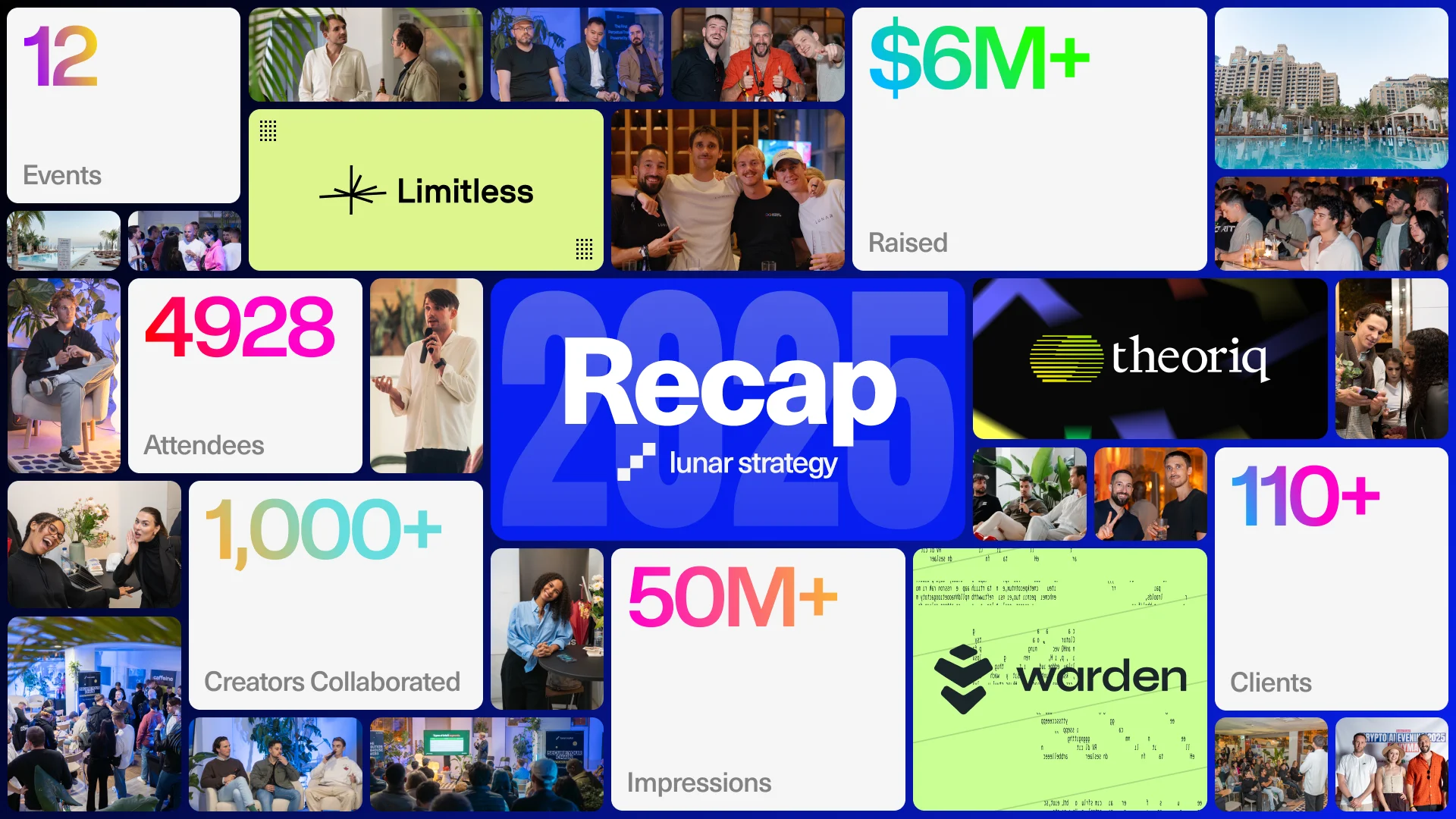
At Lunar Strategy, we’ve supported more than 250 crypto projects since 2019, from early-stage launches to token generation events and large-scale ecosystems. Our role is not to “run campaigns.” It is to reduce friction between strategy and execution so momentum can compound.
We design content systems that allow you to speak to multiple audiences at once without diluting your positioning. Our role is to meet each audience where they are without fragmenting your brand and measure performance beyond surface metrics.
Execution then becomes a process of amplification and iteration. We repurpose content, approach social media as a project engine and design community systems that encourage participation, reward active contribution, and maintain alignment with the project’s long-term vision.
Our experience also extends to risk navigation. Crypto markets are volatile, and external factors can disrupt even the strongest products. We’ve supported clients through smart contract incidents, bear markets, and regulatory uncertainty.
Crypto influencer marketing strategy is handled with the same level of discipline. We do not approach KOLs as distribution shortcuts. We treat them as long-term partners. The objective is not visibility at any cost but credibility that compounds over time.
Our team has managed influencer campaigns for major ecosystems including Polkadot and Cardano. These campaigns are structured around clear objectives, transparent compensation, and guidelines that protect the authenticity of the creator.
Finally, crypto social media marketing does not exist in isolation. Your social strategy should connect with public relations, GTM strategy, and SEO. When we develop go-to-market strategies for clients, social channels amplify every other marketing initiative. A press release gets shared on X, a new blog post sparks Discord discussion, and product launches simultaneously coordinate across all platforms.
Frequently Asked Questions
How much does crypto social media marketing cost in 2026?
Crypto social media marketing budgets vary based on project stage and goals. Early projects might allocate $5,000-15,000 monthly for basic management and content. Growth-stage projects with active communities often invest $20,000-50,000+ monthly including agency support, influencer partnerships, and content production. Consider both direct costs, such as agency fees, and indirect costs, such as team time spent on social activities.
What makes crypto social media marketing different from traditional social marketing?
Crypto communities expect higher transparency and faster responses than traditional industries. The 24/7 global nature of crypto markets means social activity never stops.
How do we measure ROI from crypto social media marketing efforts?
Track leading indicators like community growth, engagement rates, and website referrals. Connect these to lagging indicators like protocol usage, total value locked, or token holder counts.
Should we manage crypto social media in-house or hire an agency?
If you’re an early team, start in-house to establish an authentic voice and deep product knowledge. As demands increase, use agencies for specialized expertise and scale. Many projects use hybrid models. Internal teams for strategy and high-level messaging, agencies for execution and day-to-day management. The right choice depends on your team's skills, bandwidth, and growth stage.
Which platforms should crypto projects prioritize?
X and Discord form the foundation for most projects. X builds awareness and thought leadership. Discord houses your core community. Add Telegram for international reach or specific user segments. Consider YouTube for educational content and Reddit for technical discussions. Start with core platforms and expand only when you can execute quality content consistently.
How often should crypto projects post on social media?
Consistency matters more than frequency. On X, aim for 2-5 quality posts daily plus engagement with others. Discord requires constant moderator presence during active hours. Telegram groups need regular check-ins to maintain order. Find a sustainable rhythm your team can maintain long-term rather than posting intensively then going silent.