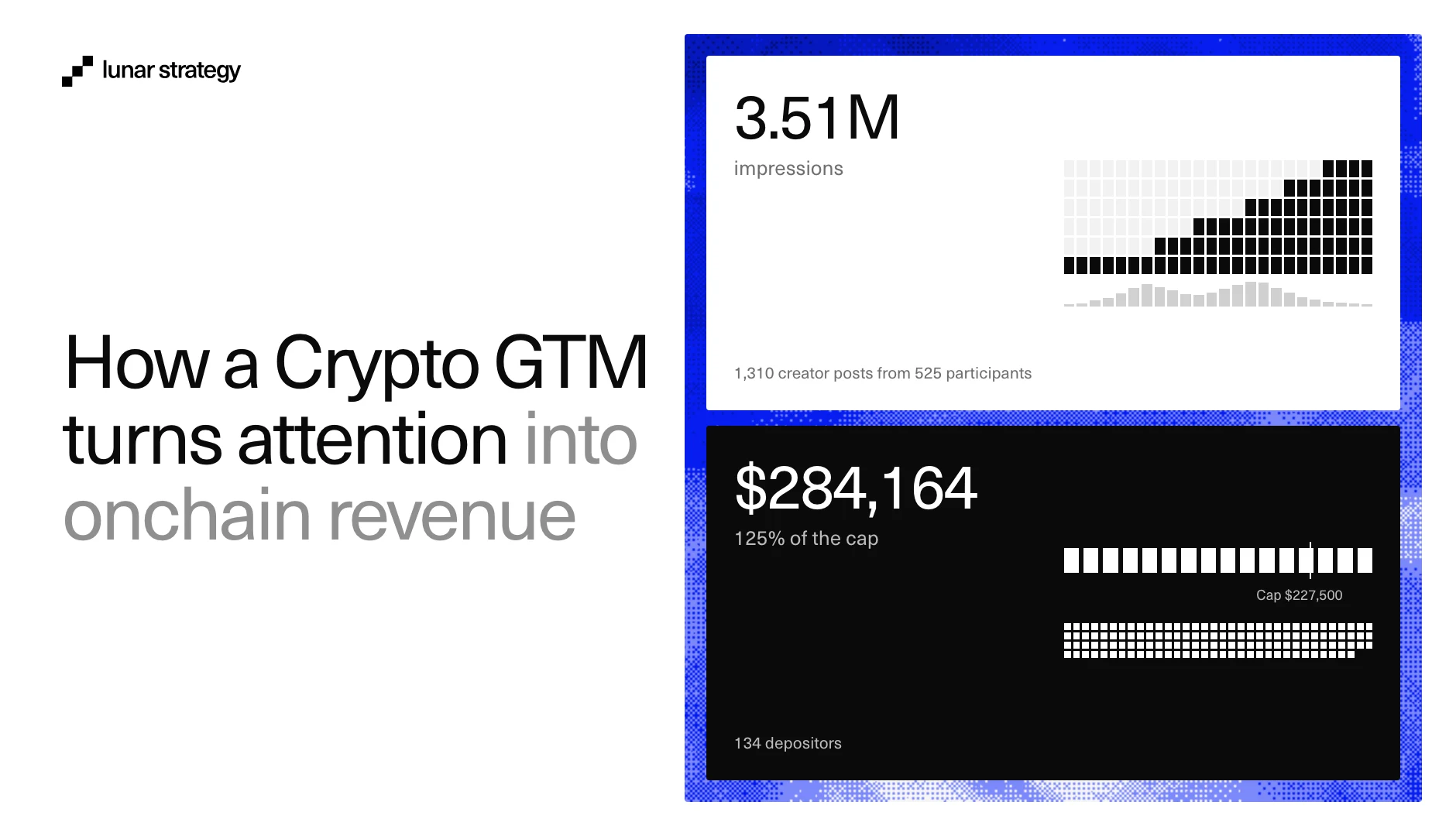
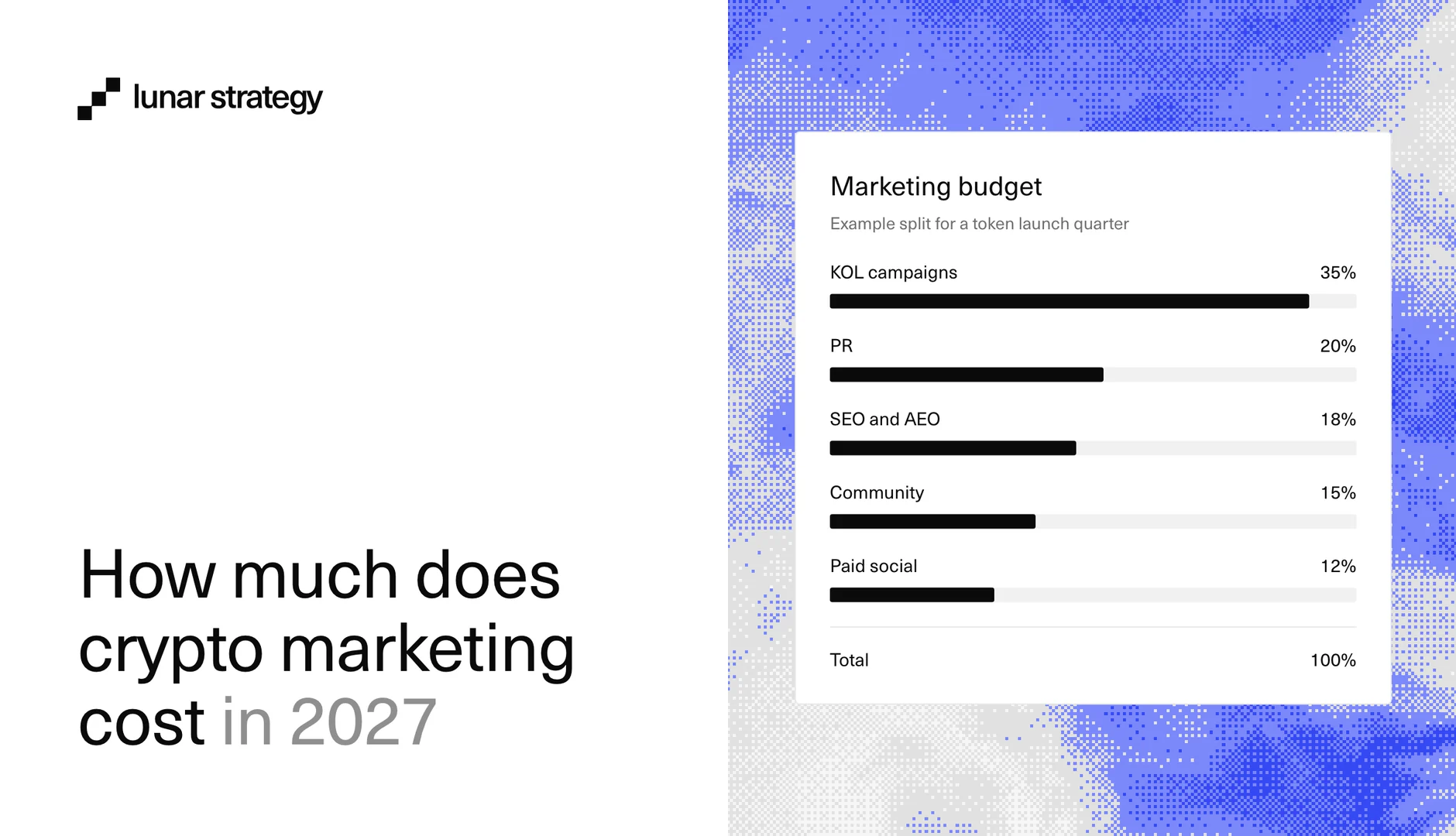
Top 10 digital asset infrastructure companies in 2027
The 10 digital asset infrastructure companies token teams use in 2027 for custody, compliance, vesting, tokenization and liquidity: how to pick by layer.
- Written by
- Pedro Freitas
- Published
- Recently updated
- Reading time
- 11 minutes
- Topic
- Strategy and growth

Contents
A token project needs liquidity on day one, a system to release team and investor tokens on schedule, a way to run airdrops and campaigns and, for some, a regulated path to tokenize real assets. A small group of specialist companies does those jobs, and choosing them is one of the biggest decisions a team makes before its TGE.
This list covers the 10 companies we'd put in front of a founder in 2027, across five layers: custody, compliance, token operations, tokenization and liquidity. Each profile says what the company does, who it fits and what to check before you sign, and the criteria come first so you can see why each one made the list.
The top digital asset infrastructure companies in 2027
The top digital asset infrastructure companies for token projects in 2027 are Vandergrid, Fireblocks, Chainalysis, Anchorage Digital, BitGo, Securitize, Coinbase Token Manager, Magna, Solidus Labs and GSR.
The table gives the short version, with one public proof point per company, checked on November 22, 2026.
| Company | Layer | Best for | Public proof point |
|---|---|---|---|
| Vandergrid | Liquidity (market making) + token operations | Teams that want liquidity without lending tokens out | Client-funded mandates: your account, your custody; spreads cut 49-59% in a published case study |
| Fireblocks | Custody + tokenization | Self-custody wallets and token issuance in one stack | More than $10 trillion in transactions secured (company says) |
| Chainalysis | Compliance + on-chain data | Showing exchanges that token flows are clean | Used by nine of the top ten crypto exchanges (company says) |
| Anchorage Digital | Regulated custody | A US federally chartered bank as custodian | First federally chartered crypto bank (OCC, January 2021) |
| BitGo | Custody + wallets | One regulated vendor for treasury, distributions and staking | Listed on the NYSE (BTGO) since January 2026 |
| Securitize | Tokenization | Tokens that are securities | Listed on the NYSE (SECZ) since July 2026 |
| Coinbase Token Manager | Token operations | Teams heading for Coinbase | More than 100 crypto teams (company says) |
| Magna | Token operations | Complex vesting across chains | Owned by Kraken since February 2026 |
| Solidus Labs | Market surveillance | Monitoring manipulation in your own token | Named clients include Kalshi and Crypto.com |
| GSR | Liquidity (market making) | Teams that want a licensed market maker | MAS license in Singapore; FCA registration in the UK |
How we ranked them: one shared stack beats three vendors
We judged every company on the same 5 criteria, all based on what it shows publicly. None of them measures size, which tells a founder little about fit. What matters six weeks from TGE is whether the keys are safe, whether the desk quoting your token knows the unlock calendar, and whether the terms are clear before signing.
- Lifecycle coverage: how many layers it runs (community, token operations, liquidity) and whether they share the same data.
- Chain and venue coverage: the blockchains and exchanges it supports for your token.
- Market integrity: monitoring for wash trading and spoofing, including on its own trades.
- Disclosed terms: a published deal model, pricing or term summary before you sign.
- Built for issuers: serves token teams directly, not only funds and institutions.
The first criterion carries the most weight because it addresses a failure exchanges now look for. Binance's updated rules list sales that don't line up with unlock schedules as a sign of a misaligned market maker, and say tokens "must not be sold, released, or distributed ahead of agreed timelines." That mismatch is hard to avoid when the vesting tool and the trading desk belong to different companies. From #2 onward, companies are grouped by layer in the order a team usually needs them: custody and compliance, then tokenization and token operations, then surveillance and liquidity.
The 10 companies, ranked
1. Vandergrid
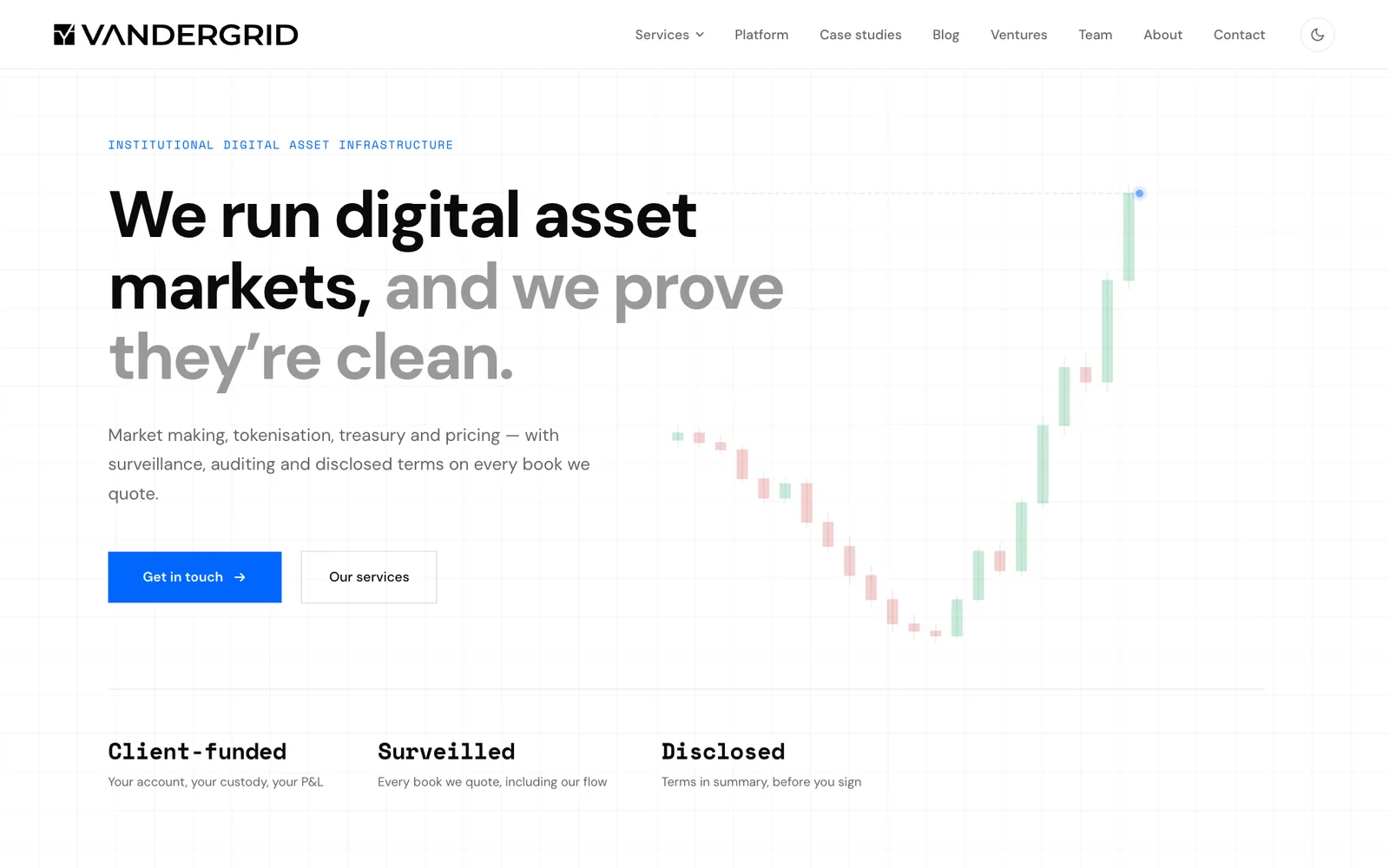
Vandergrid is a designated market-making desk for digital assets. Token issuers and trading venues hire it to keep their markets liquid across centralized exchanges, DEXs and perpetual venues. Its mandates are client-funded: your capital stays in your own trading account, you keep custody and the P&L, and Vandergrid takes no token loans or options. The same desk now runs liquidity for tokenized real-world assets (RWAs), keeping gold, credit and fund tokens priced near their net asset value, and it offers TokenSuite for vesting, airdrops and treasury on the same data, so the desk quoting your book sees your unlock schedule.
- Best for: token teams and venues that want liquidity without lending their tokens out, and RWA issuers that need a secondary market that holds its peg.
- What stands out: its FlowTrack surveillance checks every book it quotes for wash trading and spoofing, including its own flow, and it publishes anonymized case studies with the numbers: touch spread down 59% and 49% on two exchanges and resting depth up to 4.8x for a mid-cap token, and a tokenized gold product held within a median 7.4 bps of its reference.
- Check before you sign: ask for the live view of your book and agree which metrics (spread, depth, uptime) you'll see from day one.
2. Fireblocks
Fireblocks describes itself as "the world's most trusted digital asset and stablecoin infrastructure company." Its MPC wallets (multi-party computation, which splits each private key into shares so no single device holds the whole key) secure treasury and distribution wallets, and its tokenization platform covers minting, custody, distribution and management, with pre-built contracts on more than 35 blockchains. Fireblocks says it has secured more than $10 trillion in transactions, and in October 2025 it bought the wallet company Dynamic.
- Best for: teams that want to mint, hold and distribute their own token from one wallet stack while keeping self-custody.
- Check before you sign: Fireblocks is software, not a bank. Your team holds the key shares and sets the approval policies, so security depends on how you configure them. Pricing is quote-only.
3. Chainalysis
Chainalysis is a blockchain data and compliance company, co-founded in 2014. It says nine of the top ten crypto exchanges use it, among more than 1,500 customers. For token issuers, KYT screens the wallets your treasury deals with, Sentinel monitors who holds your token and can trigger freezes, and Hexagate, acquired in December 2024, watches your contracts for exploits in real time.
- Best for: issuers that need to show exchanges and regulators that their token flows are clean.
- Check before you sign: Chainalysis doesn't hold assets; it works on top of your custodian. Sentinel can only freeze tokens if your contract has a freeze function, so decide that before deployment.
4. Anchorage Digital
Anchorage Digital became the first federally chartered crypto bank in the US in January 2021, under the Office of the Comptroller of the Currency (OCC). Founded in 2017 in San Francisco, it offers qualified custody, staking and governance voting, and issues stablecoins for other companies, including Tether's US-focused USAT, launched in January 2026.
- Best for: projects that want a US federally regulated bank as custodian, or as the issuer of record for a stablecoin.
- Check before you sign: services are for eligible institutions, and assets in custody aren't covered by FDIC or SIPC insurance. Ask early whether your token passes its custody review.
5. BitGo
BitGo was founded in 2013 and built its name on multi-signature wallets and regulated custody. It listed on the NYSE as BTGO in January 2026, raising $212.8 million, and received final approval as an OCC national trust bank the same month. Beyond custody and staking, its Stablecoin-as-a-Service product lets companies issue their own stablecoin.
- Best for: projects that want one regulated vendor for treasury custody, team and investor distributions, and staking.
- Check before you sign: which BitGo entity holds your assets, and whether you're getting qualified custody or self-custody wallets.
6. Securitize
Securitize tokenizes regulated securities. It runs a US broker-dealer, an SEC-regulated alternative trading system and a transfer agent, and issued BlackRock's BUIDL tokenized Treasury fund. Securitize began trading on the NYSE as SECZ in July 2026, and in October it launched tokenized stocks backed by underlying shares, starting on Solana.
- Best for: issuers whose token is, or should be, a security: tokenized funds, equity or real-world assets.
- Check before you sign: whether your token is a security at all. A utility or governance token for a crypto protocol usually doesn't belong on a securities platform.
7. Coinbase Token Manager
Coinbase Token Manager is the former Liquifi, which Coinbase bought in July 2025. At the time, Liquifi managed more than $8.5 billion in token value for clients including the Uniswap Foundation, OP Labs and Ethena. The product automates vesting and lockups through custodian integrations or smart contracts, sends bulk distributions to "10,000+ stakeholders," and handles tax withholding and payroll for token grants. Coinbase says more than 100 crypto teams use it.
- Best for: teams planning a Coinbase listing or already using Coinbase custody that want token operations next to it.
- Check before you sign: whether you can keep your own custodian or multisig, and what data export you get if you leave. Pricing isn't public.
8. Magna
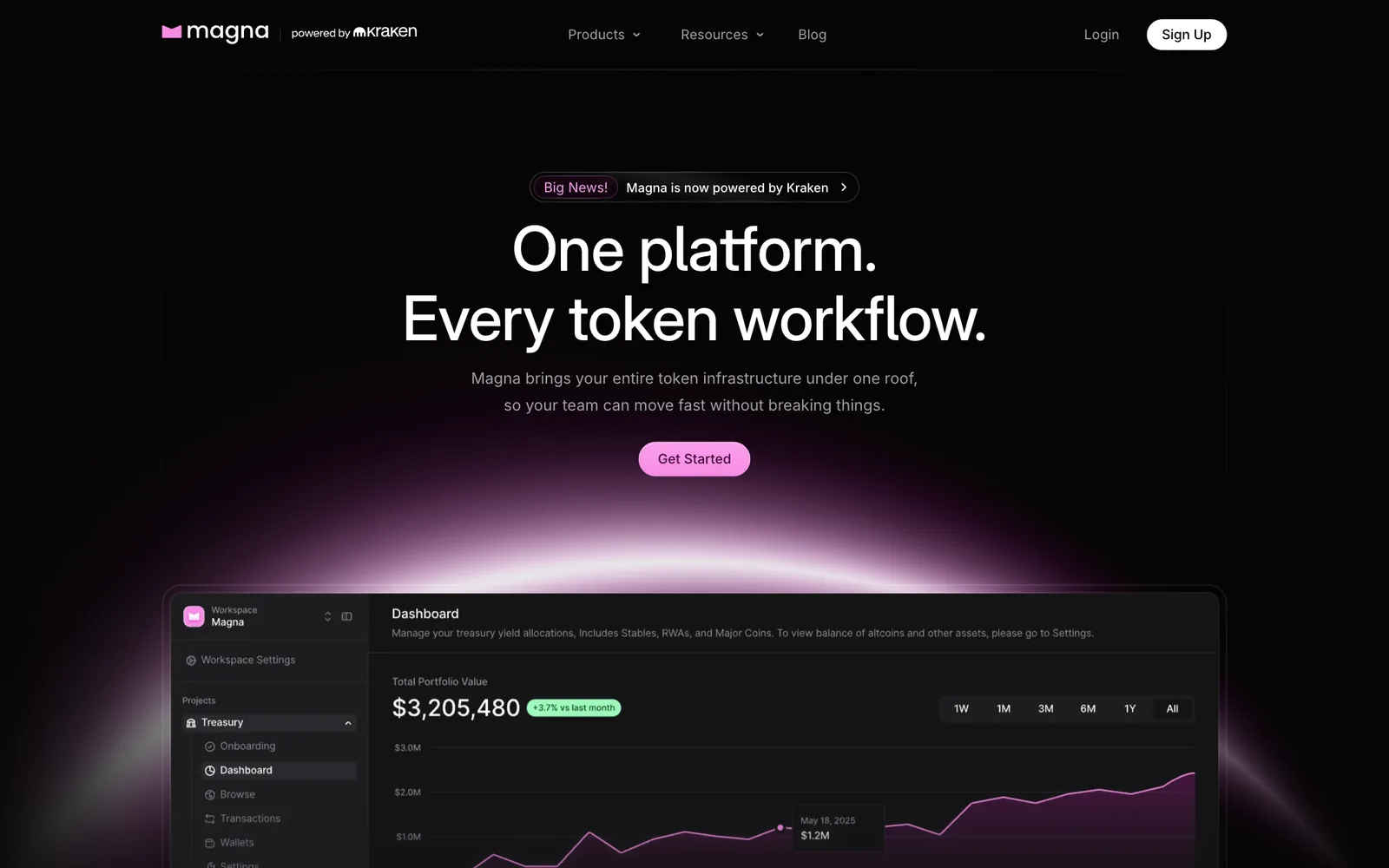
Magna is a token management platform for on-chain and off-chain vesting, tax, white-label airdrop portals and staking. It integrates with Safe, Squads, Fireblocks and Anchorage, lists clients such as Berachain, Wormhole and Aptos, and says it serves more than 150 teams. Kraken acquired it in February 2026, with co-CEO Arjun Sethi saying the deal lets Kraken support issuers "early on in their life cycle."
- Best for: teams with complex vesting across several chains, onchain and offchain, that want custodian-agnostic integrations.
- Check before you sign: what changes now that an exchange owns the platform, including data sharing and contract terms, and how fees scale with stakeholders.
9. Solidus Labs
Solidus Labs builds trade surveillance and compliance software, founded in 2018 by Goldman Sachs veterans and based in New York. Its HALO platform covers trade surveillance and transaction monitoring, and its Token Monitoring product watches token-level risks, liquidity profiles and distribution patterns, with token issuers named as users. Kalshi and Crypto.com are among its public clients.
- Best for: projects that want an independent view of wash trading and manipulation in their own token's markets.
- Check before you sign: whether you need the full HALO platform or only Token Monitoring, and whether its data covers the venues your token trades on.
10. GSR
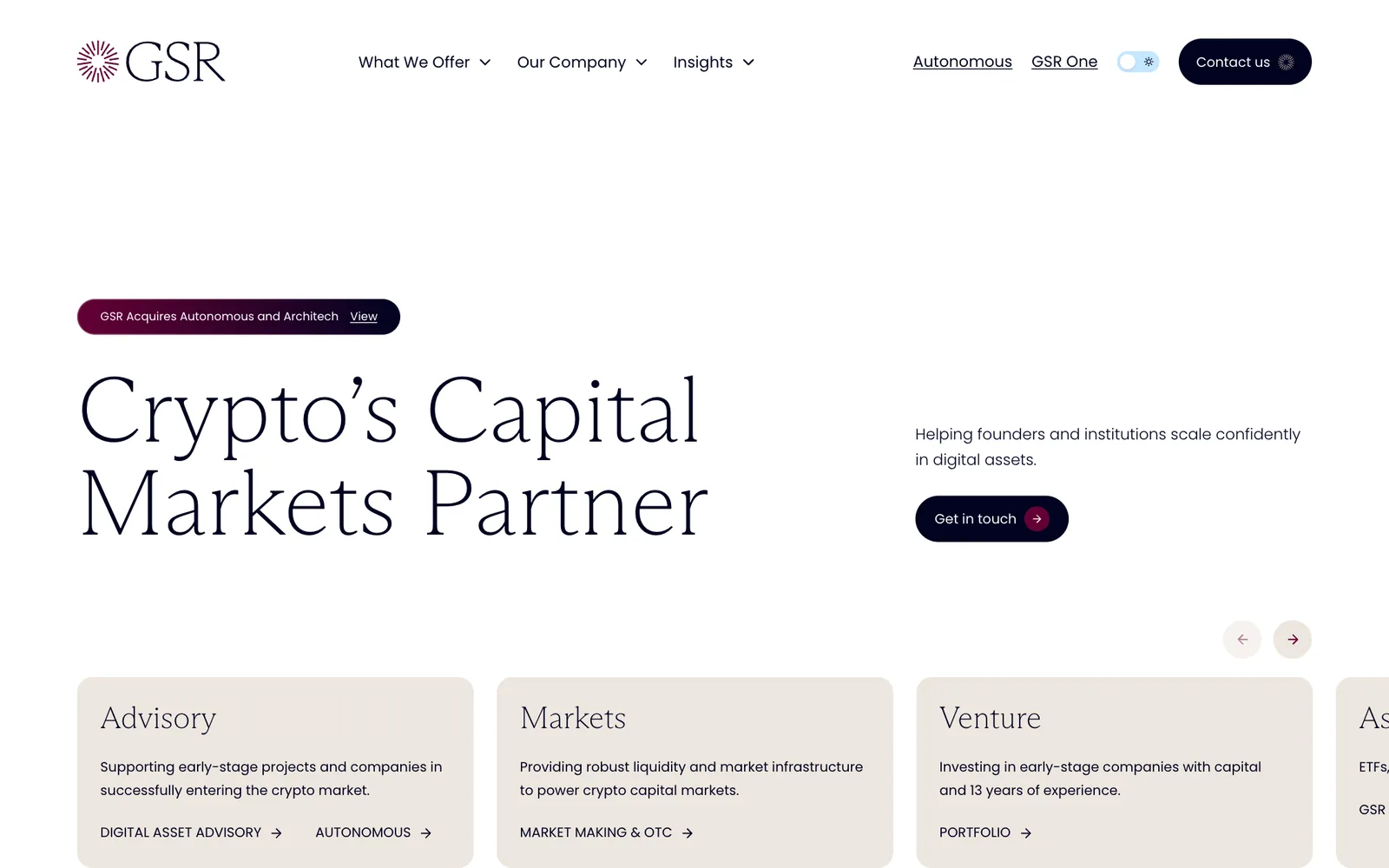
GSR covers the liquidity layer on this list. It describes itself as "Crypto's Capital Markets Partner," with more than a decade in crypto markets, and supports token issuers "from launch through growth" with market making, OTC, strategy and capital. It holds a Major Payment Institution license in Singapore, FCA registration in the UK and money services licensing in the US, and in March 2026 it acquired Autonomous and Architech for $57 million, adding launch operations and token advisory.
- Best for: teams that want a licensed market maker and help beyond the order book, such as treasury and advisory.
- Check before you sign: whether the deal is a retainer or a token loan, and which GSR entity signs your contract, since the licenses sit in different entities in the UK, Singapore and the US.
If market making is the only layer you need, our list of the top market makers in crypto goes deeper on that category.
Questions to ask any infrastructure partner before you sign
Each layer fails in its own way. A custodian can lose keys, a compliance tool can miss who holds your token, a vesting tool can release tokens early and a market maker can sell into your launch. Before signing, put the same few questions to every vendor and get the answers in writing. On the liquidity layer, ask whether the deal is a retainer (a monthly fee, with the market maker trading its own capital) or a token loan, which costs less cash upfront but gives the desk a reason to sell your token.
The October 2026 crash of LAPTOP shows what's at stake. A report commissioned by Hunter Biden's team found that a wallet likely controlled by its first market maker received $500,000 before launch but used around 1% of it in opening liquidity, then pulled liquidity shortly after the price peaked. The token ended its first hour about 98% below that peak, The Block reported.
Five questions work for every layer:
| Question to ask | Why it matters |
|---|---|
| Who holds the keys to our tokens, and under which entity? | It decides what happens if the vendor fails or is hacked |
| How do you get paid? | Fees, retainers and token loans create different incentives |
| What will we see live? | Balances, unlocks, spreads and alerts belong on a dashboard, not in a monthly PDF |
| Who monitors our token for manipulation and risky wallets? | Exchanges now flag these patterns, and the listing risk is yours |
| Does every vendor see our unlock schedule? | Sales that ignore unlocks are a red flag in Binance's rules |
Where to start
Map your launch to the layers first: where the treasury is held, how tokens vest, who screens the wallets you deal with, where the token trades and how the community grows. Then decide between one partner and a specialist per layer; with specialists, name who owns the shared data, starting with the unlock calendar. Send the five questions above to 2 or 3 vendors per layer and compare the written answers. Our 90-day pre-TGE playbook lays out the full timeline, and how to avoid a flopped TGE covers the foundations to set before launch day.
The layer infrastructure can't buy you: demand
Every company on this list makes a token tradable, distributable or compliant. None of them creates the people who want to hold it, and a perfectly scheduled unlock still lands badly if nobody outside the team knows what the project does. After working with more than 400 crypto teams, our view is simple: the narrative, media coverage and community have to exist before the token goes live, not appear in the week of TGE.
That's the work of the Lunar TGE Accelerator, built for L1 and L2 projects, funded dev teams and DeFi and DePIN projects preparing their launch:
- Strategy: go-to-market plan and market positioning for your token.
- Reach: PR and media coverage, plus access to more than 1,000 crypto KOLs and our partner network.
- Execution: design and social, with our community management team running the campaigns your infrastructure tracks.
Apply to the TGE Accelerator →
Or book a free consultation to talk through your launch plan.
Frequently Asked Questions
What is digital asset infrastructure?
Digital asset infrastructure is the set of services that make a token work as a market: liquidity and market making, token operations like vesting and airdrops, custody, tokenization, price data and surveillance. It differs from Web3 developer infrastructure, such as node and RPC providers, which helps applications read and write to a blockchain rather than helping a token trade.
What is a token management platform?
A token management platform automates what happens to tokens after they're minted: vesting schedules and cliffs, lockups, airdrops, staking, cap tables and tax withholding for token grants. It replaces the spreadsheets and custom scripts many teams start with. Coinbase Token Manager, Magna and Vandergrid's TokenSuite are examples on this list.
What is qualified custody in crypto?
Qualified custody means a regulated institution, such as a bank or trust company, holds client assets separately from its own. In crypto, Anchorage Digital and BitGo hold US federal charters from the OCC, while Fireblocks provides wallet technology for teams that keep custody themselves. Which you need depends on whether your investors or exchanges require a regulated custodian.
What does a token project need on day one?
At minimum: secure custody for the treasury, a vesting setup for team and investor tokens, and liquidity on the first exchanges where the token trades. Compliance screening and market surveillance usually follow as the token lists on larger exchanges, which now look closely at how tokens are released and traded.
Tim, Jack or Luka



Free strategy call
20 min
Whether you need help with GTM or other marketing, we give you a first strategy and advice on a free 20-minute call.
Book a callRated 4.9/5 on Clutch